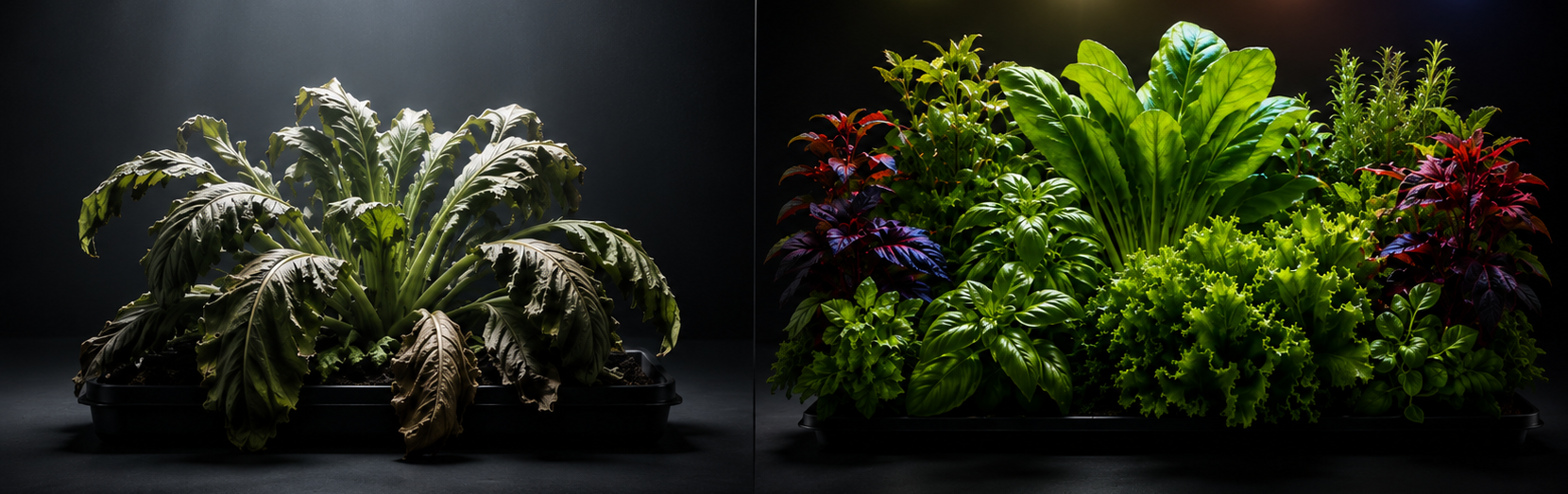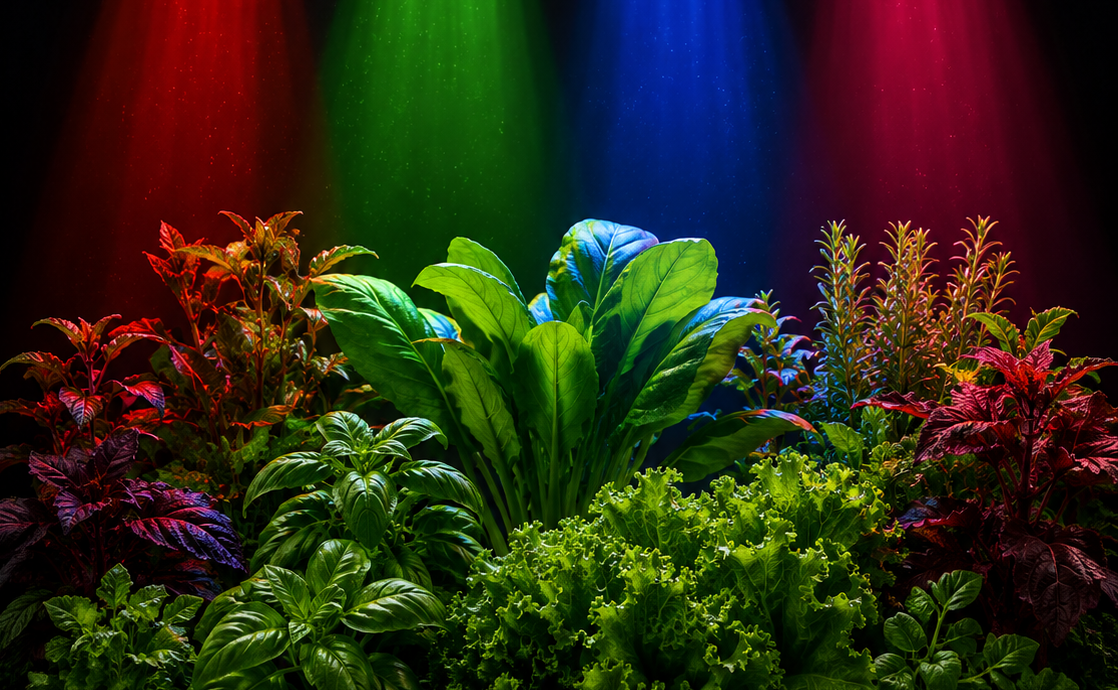


Grow GuideKnowledge
Full Spectrum: Why “All Light” Is Not Automatically Better
Full spectrum sounds good — but plants need the right combination of spectrum, intensity and control, not just a broad light output.
This note is no longer available. All notes
The term “full spectrum” is used very often in grow light marketing. It sounds like natural sunlight and therefore like the best possible solution. In practice, however, the topic is more complex.
Plants use light not only as an energy source for photosynthesis. Light is also a signal. Different wavelengths can influence growth, leaf development, stretching, flowering and plant shape. Blue, red and far-red regions are especially important. Green light is not simply “useless” either: research shows that green light can penetrate deeper into leaves and plant canopies and contribute to photosynthesis there.
The problem is that “full spectrum” is often not a precise quality promise. A lamp can emit broad-spectrum light and still be inefficient, poorly distributed or unsuitable for a specific application. For plants, it is not only about how many wavelengths are present. What matters is how much usable light reaches the plant, how the spectrum is composed and whether it can be adapted to the growth stage, crop and growing area.
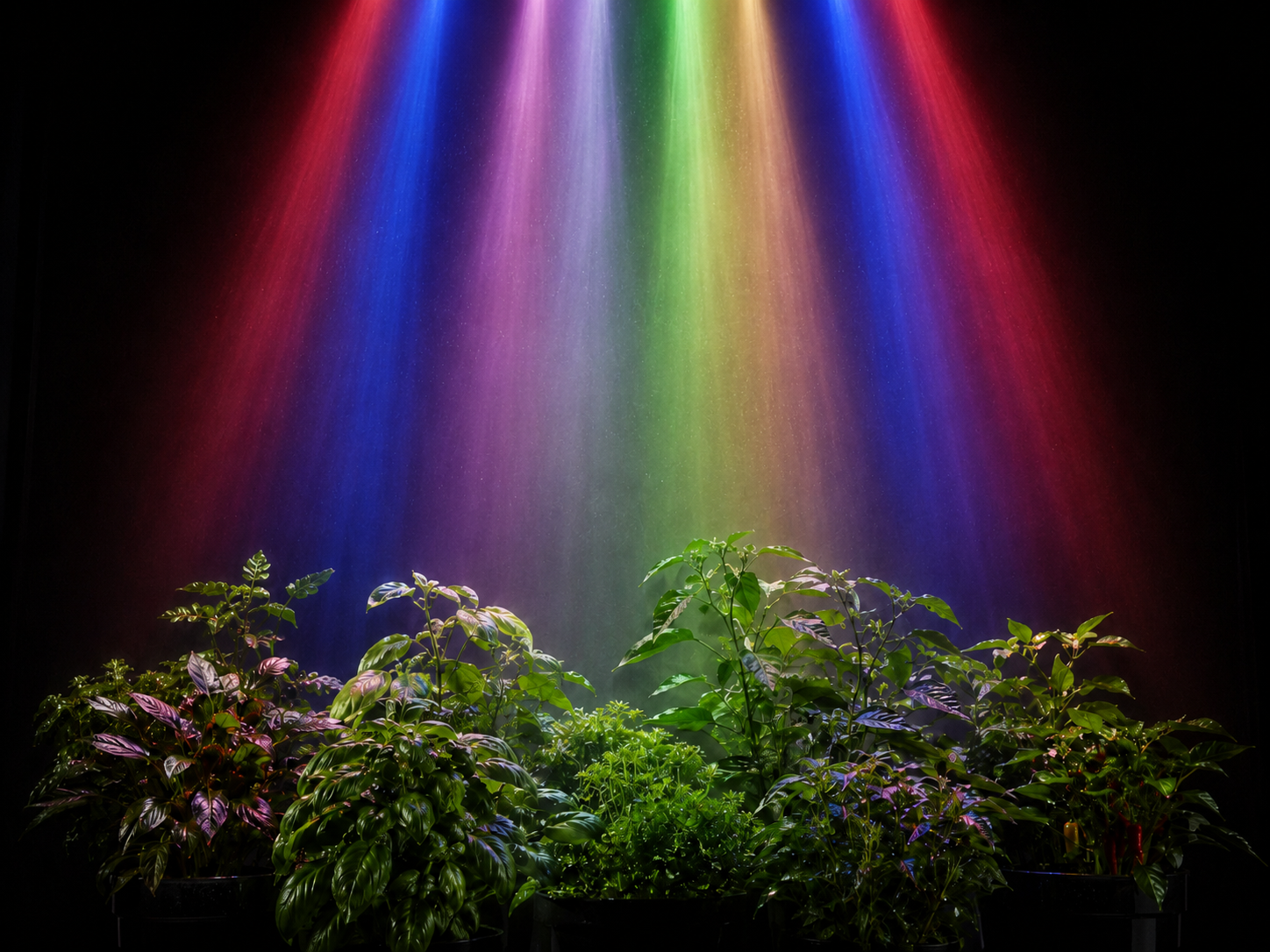
This is where a controllable system like FLORIQ has an advantage. Instead of relying on one fixed spectrum, FLORIQ uses individually controllable light channels. This allows plant light to be used not just broadly, but intentionally: matched to area, distance and application.